How to Create Joy in Midlife (By Reducing Mental Overload)
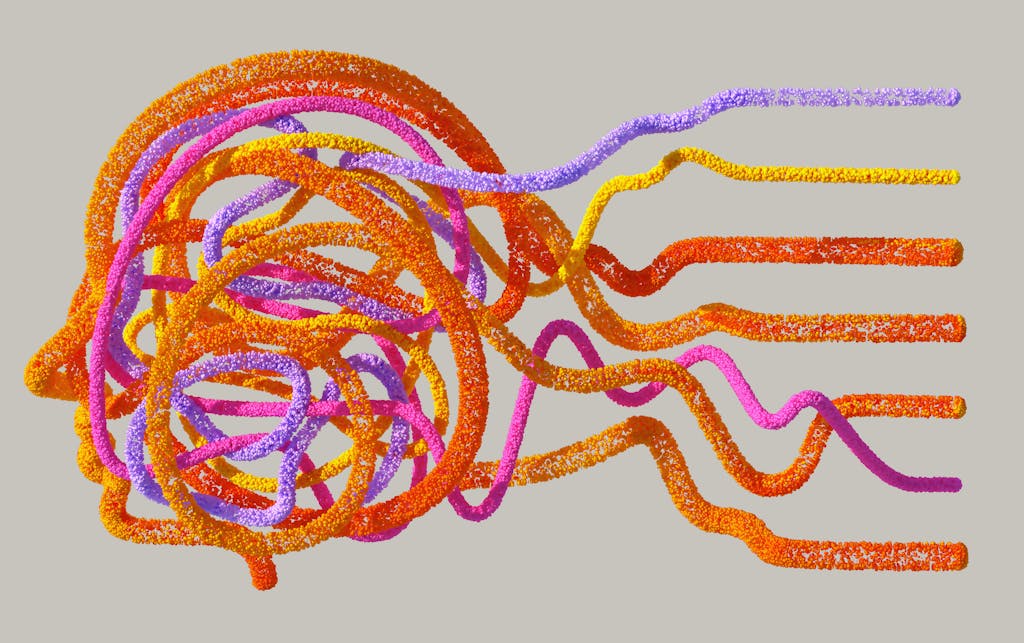
If you’re wondering how to create joy in midlife — especially when your days feel full and your energy feels different — you’re not alone. Many women assume they’ve simply “lost their spark,” when in reality they’re navigating mental overload and early stages of midlife burnout recovery.
By the time we reach our 50s, the mental load has often shifted. Caregiving, career transitions, changing bodies, and accumulated responsibility can leave us feeling stretched thin. When your brain is constantly managing stress and decision fatigue, joy doesn’t disappear — it simply requires more intention.
As an educator with advanced training in Brain-Based Learning, I’ve spent over 25 years studying how we process stress, build habits, and reshape patterns through neuroplasticity. What I’ve learned is this: joy isn’t something we chase. It’s something we train our attention to notice and strengthen.
This guide offers practical, brain-informed shifts designed specifically for women experiencing mental overload in midlife. It provides tools that work with your natural rhythms, not against them. Whether you’re navigating an empty nest, career changes, or quiet burnout, these strategies are meant to feel sustainable, grounded, and deeply human.
Related posts: Create a Life You Love

What’s Happening in the Midlife Brain
I have an advanced degree in Brain-Based Education, which is just a fancy way of saying I’ve spent some time studying how the brain learns best and how it operates. In the classroom realm, it’s all about using teaching strategies that work with the brain’s natural ways of processing and storing information to keep students engaged and primed for learning. That same science applies to you and me in finding more joy in everyday life.
Neuroplasticity is the brain’s ability to change, adapt, and form new neural connections over time. This means that our thoughts and habits (patterns) aren’t set in stone. We can literally rewire our brains based on what we focus on the most and practice regularly. When it comes to intentionally creating joy, neuroplasticity is like having a personal trainer for your mind.
How to Reduce Mental Overload in Midlife
If joy feels harder to access, the solution isn’t adding more gratitude practices. It’s reducing the cognitive strain that’s crowding out your emotional bandwidth.
Mental overload in midlife typically comes from three sources: decision accumulation, emotional labor, and environmental friction. Addressing these directly is what restores clarity.
Before you can begin to see joy show up regularly in your life, you have to do the following things FIRST:
1. Reduce Decision Accumulation
The midlife brain tires from volume, not difficulty. By 5:00 PM, your executive function — the part of the brain responsible for planning and decision-making — is depleted.
To lower strain:
- Rotate 5–7 reliable dinner options instead of reinventing meals nightly.
- Create a wardrobe formula for high-demand days.
- Use “default days” (e.g., Tuesday = leftovers, Sunday = reset).
- Limit nonessential micro-choices (apps, subscriptions, social commitments).
Every automated decision preserves mental energy for what matters.
2. Minimize Emotional Labor
Women in midlife often carry invisible cognitive tabs: remembering appointments, managing family logistics, anticipating others’ needs.
Emotional labor drains working memory.
To reduce it:
- Share calendar visibility with household members.
- Externalize mental lists onto visible systems (whiteboard, planner, shared app).
- Set defined “mental off-hours” where you are not the default problem-solver.
- Clarify responsibilities rather than quietly absorbing them.
Reducing invisible responsibility reduces baseline stress.
3. Lower Environmental Friction
Your environment constantly feeds your nervous system signals. Clutter, unfinished projects, and visual noise increase low-grade cognitive strain.
To calm this:
- Clear one high-traffic surface completely.
- Reduce open tabs — both digital and physical.
- Create one “no-decision” zone (a reading chair, a morning coffee corner).
- Batch errands to reduce context switching.
Environmental simplicity lowers neural load.
4. Regulate Before You Optimize
Midlife burnout recovery is not solved by productivity systems. It begins with nervous system regulation.
Before adding new routines:
- Prioritize consistent sleep timing.
- Stabilize blood sugar with balanced meals.
- Reduce late-evening stimulation.
- Build in daily quiet pauses (even five minutes).
A regulated nervous system accesses joy more easily than a stimulated one.
🌟How to Create Joy in Midlife 🌟
When cognitive demand decreases, your brain shifts from threat-monitoring to connection. Joy isn’t manufactured. It becomes neurologically accessible when you reduce the noise.
This is not about becoming more positive. It’s about becoming less overloaded.
Joy in midlife is not created by adding more positivity practices. It becomes accessible when cognitive strain decreases, and the nervous system feels safe again.
What Joy Actually Is (And What It Isn’t)
While the dictionary defines joy as ‘pleasure,’ neuroscience sees it differently. Joy is the byproduct of a regulated nervous system. When we are in a state of ‘flow’ or deep connection, our brain reduces cortisol production and increases dopamine and oxytocin. For women over 50, joy is less about ‘elation’ and more about neurological safety—the ability to feel at peace even when the world is chaotic. Indeed, experts agree!
According to an article inPsychology Today, joy is more than just a fleeting emotion—it’s a deeper, more enduring state of well-being that comes from meaningful experiences and connections.
Obviously, joy is very different from happiness (more on that in a future blog). Joy isn’t just about external circumstances. In fact, it’s something that emerges from within when we engage with the things that matter most. And truthfully, it’s often the ordinary, everyday moments—sharing a meal, toes in the sand, the perfect cup of coffee, an intimate conversation—that have the greatest impact on our mood and well-being, allowing us to cultivate more joy in our lives long-term.
How to Strengthen Joy Through Savoring
The more you engage in joyful activities, practice gratitude, savor small moments, and shift your mindset toward positivity, the stronger those neural pathways become. Over time, your brain starts to default to joy more easily because you’ve trained it to recognize and respond to those experiences. And the good news is that you don’t have to force it. Consistently feeding your brain the experiences and thoughts that help joy grow will rewire your brain!
So the goal for us is to intentionally cultivate joy in simple, everyday things by —like how we live, what we eat, how we create spaces at home, and in our relationships, travels, and wellness routines. It’s not about big, life-changing moments; it’s about small shifts that make life feel lighter, fuller, and more joyful. Joy Is a Skill – Train Your Brain For Joy Like You Would a 5K.
Why Joy Is a Skill You Can Practice
Remember, joy isn’t something that simply happens to us — it’s something we cultivate. It’s less like waiting for good weather and more like training for a race. We prepare for it. We practice it.
From a brain-based perspective, that training process is called myelination — the strengthening of neural pathways through repetition. Each time you savor your coffee, pause to notice something beautiful, or practice gratitude, you complete a small “joy rep.” Over time, those repeated moments reinforce the pathways associated with calm and contentment, making it easier for your brain to return there again. Consistency isn’t just a mindset shift; it’s structural change.
Like building strength or endurance, our capacity for joy expands gradually. It doesn’t require dramatic reinvention. It grows through small, repeated choices — gentle shifts practiced daily — until what once felt intentional begins to feel natural.
Here are the steps to start training for joy:
- Warm-Up: Begin with small, simple moments that bring you joy. Maybe it’s the feeling of sunlight on your skin, the first sip of coffee, or the sound of laughter. These little moments are the warm-up for your brain.
- Reps & Sets: Consistency is key. Just like you wouldn’t train for a race by running once a month, you can’t expect joy to show up if you don’t practice regularly. Incorporate small “joy reps” into your daily life, like gratitude journaling, taking a moment to notice something beautiful, or intentionally connecting with others.
- Rest Days: Not every day will feel joyful, and that’s okay! Sometimes, the best thing you can do for yourself is to rest. Embrace those quieter moments as part of your journey to cultivating lasting joy. Your brain needs recovery too, and that’s just as important. By the way, did you know there were several different types of rest? Check out Dr. Saundra Dalton-Smith’s rest quiz and discover what kind of rest you really need.
- Track Progress: Every few weeks, pause and reflect. What moments sparked joy this week? What didn’t quite work? Track your “training” and adjust where needed. Just like any new skill, it’s about finding the rhythm that works for you and staying open to the process.
Start Here: Your Gentle Joy Reset
If you’re wondering how to create joy in midlife, begin here — not with a dramatic overhaul, but with one small moment of attention.
Notice something steady today. The warmth of your coffee. The quiet of an early morning. A conversation that felt grounding instead of draining. Pause long enough for your nervous system to register it.
This is how joy becomes accessible again — not by adding more pressure, but by reducing mental strain and strengthening what already feels safe and good.
When we lower cognitive overload, joy doesn’t have to be chased. It rises naturally.
And that’s how to create joy in midlife — gently, intentionally, and in a way that lasts.

Want more inspiration? Try this next: 15 Do-Nows to Create a Life You Love