A Space That Belongs to You: The Quiet Reset for Midlife Overwhelm
A space that belongs to you becomes essential in midlife — not because you suddenly care more about decor, but because the constant bracing for other people’s needs starts to wear on your nervous system.
It isn’t just that you’re busy. It’s that you rarely have a place to land where you’re not being useful, responsive, or available. Over time, that quiet, ongoing strain creates a kind of environmental friction that makes clarity — and even joy — feel farther away than they should. For many women, what feels like exhaustion is actually midlife overwhelm at home — the steady accumulation of shared space, shared responsibility, and very little solitude.
When your surroundings never fully belong to you, your brain stays in a subtle “watchtower” mode — scanning, anticipating, staying ready. Creating a space that belongs to you lowers that alert system, giving your prefrontal cortex — the part responsible for calm thinking and emotional regulation — the room it needs to function well.
Creating a quiet place at home isn’t about design trends or aesthetics. It’s a deliberate way to reduce mental noise around you so your body can finally soften and your mind can think clearly again.

Why a Space That Belongs to You Actually Works
This isn’t about aesthetics. It’s about what your nervous system does when it finally feels unobserved.
In midlife, many women live in a constant state of subtle bracing for the “next” — listening for footsteps, anticipating needs, tracking schedules, responding before being asked. Even in a loving home, that low-level alertness rarely turns off. This chronic state of bracing is a primary source of the mental noise that makes midlife feel so heavy.
A space that belongs to you interrupts that pattern.
Here’s how.
RELEASE: Letting Your Body Stop Performing
- It is: A place where your shoulders drop. Where your face relaxes. Where you are not being watched, needed, or assessed.
- It is not: A place where you have to justify your time or explain why you’re sitting down. When your body knows it isn’t on display or on call, something softens. That softening is not indulgent or selfish; it’s freeing.
RECLAIM: Protecting Your Mental Capacity
- It is: A small sensory buffer. A chair, a corner, a patio spot, a giant pillow on a daybed — somewhere your brain isn’t processing laundry piles, open tabs, or someone else’s voice.
- It is not: Another “project.” Not a self-improvement zone. Not a productivity nook with a checklist. Midlife overwhelm isn’t always about doing too much. It’s about never fully disengaging. This space gives your mind a break — a boundary your nervous system can feel.
REWIRE: Teaching Your Brain a New Rhythm
- It is: A designated place that quietly tells your brain, “You are allowed to stop being useful now.”
- It is not: Something you have to perfect, optimize, or make impressive. When you return to the same spot consistently, your brain begins to associate it with settling instead of striving. Over time, that becomes a habit of safety — not just a moment of quiet.
Creating a Calm Corner at Home Without Turning It Into Another Task
A calm corner at home does not require a spare room, a shopping list, or a plan.
In midlife, constant input — noise, clutter, shared space, digital pings — quietly accumulates. For many women, this shows up as sensory overload in adults. It isn’t dramatic, but it’s steady enough to keep the nervous system slightly on edge.
A calm corner interrupts that pattern.
It might be:
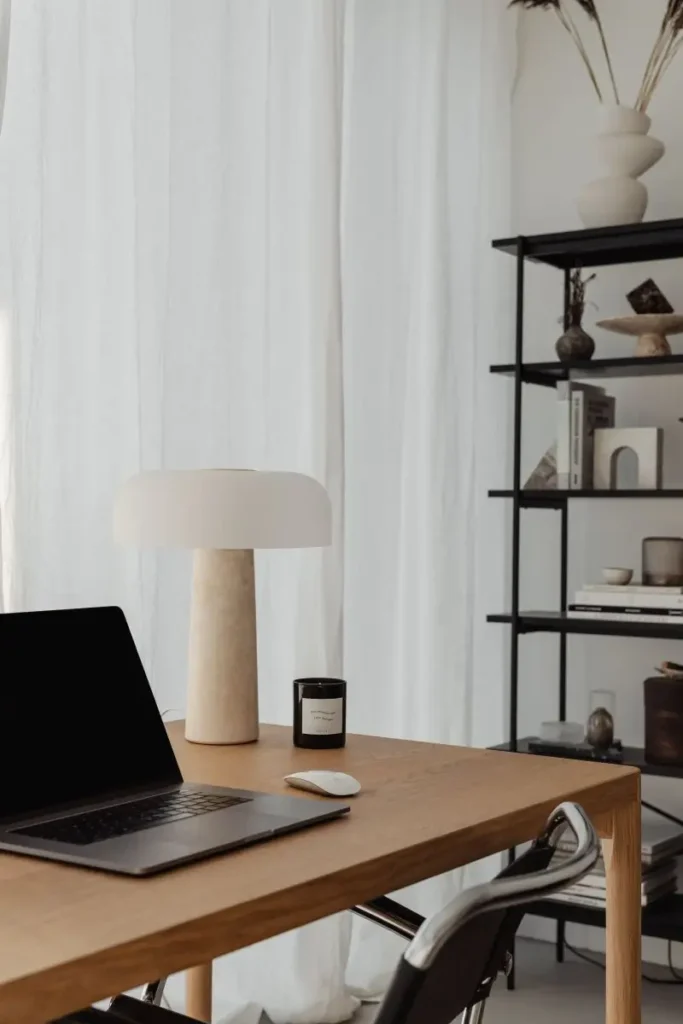
- one chair that stays where it is, with an ottoman to put up your feet.
- one lamp you turn on at the end of the day
- a small side table (or box) where you keep personal items
- one small boundary that says, “This is mine”
The most important part of this space isn’t physical. It’s emotional.
You don’t need to know what you’ll do there every time. Reading, praying, writing, talking on the phone, musing — or doing nothing at all — are all enough. The purpose isn’t activity. It’s presence. This isn’t something to “work on” or improve.
Remember, simplicity helps here. Fewer visual demands, softer light, and natural textures tend to feel calming because they give the mind less to process. The goal isn’t perfection — it’s ease.
Why This Matters So Much for Midlife Women
By midlife, many women are carrying more than they realize. Even in loving homes, there is often very little that is truly theirs — space included. Decisions are shared. Schedules overlap. Needs compete. Having a space that belongs to you isn’t indulgent — it’s a quiet form of nervous system regulation in a season of layered responsibility.
Having a space that belongs to you creates a sense of safety and control that is easy to underestimate. It supports steadier emotions, clearer thinking, and a quieter inner life. When you know there is a place where you can close the door — literally or emotionally — your body relaxes in a way it often can’t otherwise.
This isn’t about withdrawing from family or responsibility. It’s about having a place where you don’t have to orient yourself around anyone else’s needs. That kind of autonomy matters deeply in midlife, when identity is shifting and clarity is becoming more important than performance.
A Moment of Permission
If you don’t have this space yet, you are not behind. If it feels strange to want it, that’s understandable.
If you’re not sure what you would even do there, that’s okay too.
A space that belongs to you isn’t meant to fix anything. It’s meant to give you somewhere to land when the rest of life feels demanding.
Coming Home to Yourself
A space that belongs to you doesn’t change your circumstances overnight. What it changes is how supported you feel within the circumstances.
In midlife, clarity often comes not from adding more, but from having one place where nothing is required of you. A place that quietly reminds you that you still matter — not because of what you do, but because of who you are.
That kind of space doesn’t need to be perfect. It just needs to be yours.
Additional Reading
If the ideas in this post resonate, you might also find these pieces helpful:
If you’re feeling tired or overstimulated lately
You may want to explore my writing on burnout recovery and why constant noise and responsibility can quietly wear us down over time. This piece offers perspective and reassurance when rest feels harder than it should.
→ Burnout Recovery: How Long It Really Takes
If being gentle with yourself doesn’t come naturally
I’ve written more about self-compassion in midlife, especially why it can feel uncomfortable after years of being capable, responsive, and dependable. This post goes deeper into permission without self-improvement pressure.
→ 15 Ways to Be Gentle with Yourself
If you’re tired but don’t have the energy for anything complicated
You might also appreciate this reflection on 5-minute self-care that actually helps when you’re tired. It’s about small, realistic moments of relief — not routines to maintain — and pairs naturally with the idea of having a quiet place to land when your energy is low.
→ 5-Minute Self-Care That Actually Helps When You’re Tired
If journaling or reflection feels like a gentle next step
For those who enjoy writing or quiet processing, I’ve also shared thoughts on reflection as a way to reconnect with yourself — not as a habit to optimize, but as a place to listen.
→ Journaling Prompts for Self-Discovery