How to Tell If the Mental Load in Midlife Is Draining You
What is the mental load in midlife? The mental load in midlife is the invisible labor of anticipating, planning, and managing the complex needs of aging parents, adult children, and career leadership. Unlike the household chores of earlier decades, this “invisible office” creates a constant hum of mental noise that makes daily joy feel inaccessible.
Why I Focus on the “Invisible Weight”
After 30 years of navigating the transitions of Atlanta life—from career shifts to the “sandwich generation” squeeze—I’ve realized that most midlife women aren’t in a crisis; they are simply depleted! You aren’t failing at wellness; you are carrying a mental load that has reached its maximum bandwidth. Instead of more self-care, you need less care!
In this post, my goal is to help you identify the environmental friction that quietly weighs you down so you can reduce the noise and finally feel joy again!
The mental load is the ultimate source of environmental friction. It creates a constant hum of mental noise that makes it impossible to access joy.”
K. Brown
What Is the Mental Load in Midlife?
The Mental Load is the invisible labor of anticipating, planning, and delegating everything required to keep a life and household running. In midlife, this invisible weight expands to include managing aging parents, supporting adult children, and navigating career leadership.
Much of this labor is not visible. It happens quietly in your mind. And because it’s mostly internal, many women assume the exhaustion they feel is simply “normal life.”
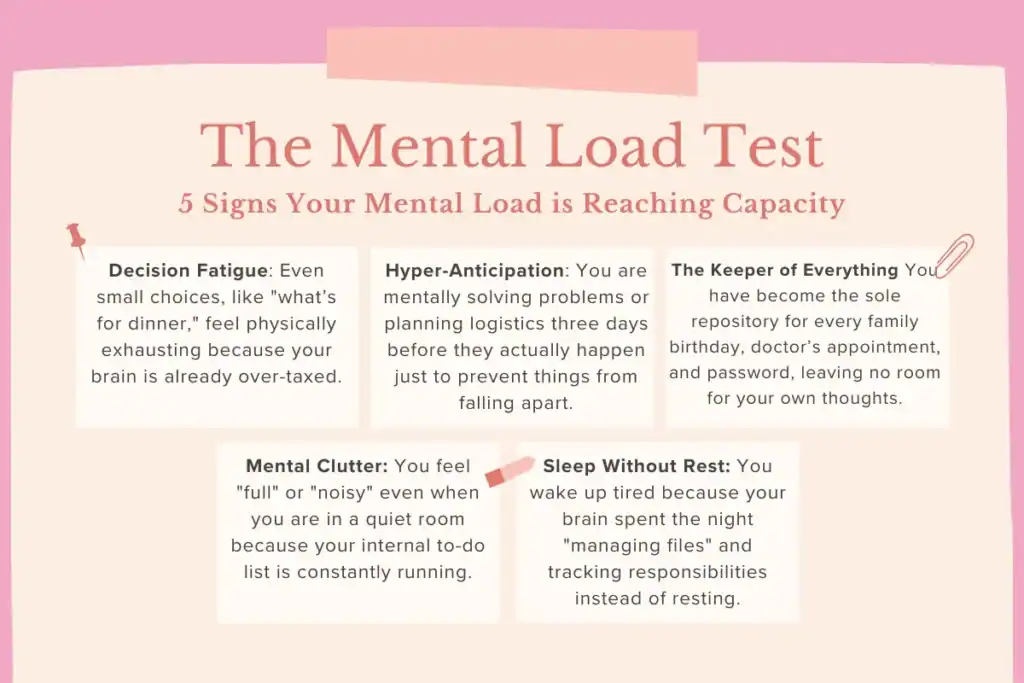
The Mental Load Test: 5 Signs Your Mental Load is Reaching Capacity
Because this weight is invisible, many women don’t realize they are carrying it until they hit a wall. If you recognize these five signs, your mental load in midlife has likely reached its limit:
- Decision Fatigue: Even small choices, like “what’s for dinner,” feel physically exhausting because your brain is already over-taxed.
- Hyper-Anticipation: You are mentally solving problems or planning logistics three days before they actually happen just to prevent things from falling apart.
- The Keeper of Everything You have become the sole repository for every family birthday, doctor’s appointment, and password, leaving no room for your own thoughts.
- Mental Clutter: You feel “full” or “noisy” even when you are in a quiet room because your internal to-do list is constantly running.
- Sleep Without Rest: You wake up tired because your brain spent the night “managing files” and tracking responsibilities instead of resting.
Why the Mental Load Gets Heavier in Midlife
In earlier stages of life, responsibilities are often more defined. Work, parenting, and household tasks each have clearer boundaries. Midlife tends to blur those boundaries. Many women find themselves holding multiple roles at once:
Supporting aging parents – You may be coordinating doctor appointments, helping manage medications, or thinking through long-term care decisions.
Staying emotionally available to adult children – Even when children are grown, they still turn to you for advice, reassurance, and stability during big life transitions.
Managing a household that still depends on you – From finances to maintenance to family traditions, much of the organizational responsibility still sits in your mind.
Handling career leadership or increased responsibility – Midlife is often when women reach senior roles at work, which adds another layer of decision-making and problem-solving.
Each of these roles requires mental capacity. And when they stack on top of each other, the mental load quietly expands.
A Simple Mental Load Checklist
If you want a quick way to notice how much you’re carrying, consider these questions.
Do you often find yourself:
- keeping track of multiple people’s schedules in your head
- remembering details that others forget
- managing emotional dynamics within your family
- coordinating plans that no one else organizes
- thinking several steps ahead to prevent problems
- feeling responsible for the overall stability of your household
Most women will recognize at least a few of these.
But when many of them happen at the same time, the mental load can start to feel overwhelming.
Why the Mental Load Feels So Mentally Exhausting
The brain has limits on how much information it can hold and manage at once. Psychologists often describe this as cognitive load—the amount of mental effort required to process and organize information. When the brain is constantly tracking responsibilities, it has less space for rest, creativity and joy.
That’s why women carrying a heavy mental load often experience:
- decision fatigue
- difficulty concentrating
- feeling mentally cluttered
- emotional exhaustion
If this sounds familiar, you may find it helpful to read more about how this works in daily life in Reduce Cognitive Load in Midlife.
Understanding the brain’s limits can help explain why even capable, organized women sometimes feel completely drained.
Pro-Tip: How to Explain the Mental Load Stop asking for “help.” Help implies it is your job that they are assisting with. Instead, ask for ownership. When someone owns a task (like “Wednesday Dinners”), the mental load of planning, shopping, and prepping moves off your plate and onto theirs.
How to Start Lightening the Mental Load in Midlife
The goal isn’t to control life perfectly. The goal is to protect your mental bandwidth. Here are a few ways many women begin easing the load.
Move responsibilities out of your head
When everything lives in your mind, it consumes constant attention. Use written lists, shared calendars, or simple planning systems so information lives somewhere outside your brain.
Reduce unnecessary decisions
Small decisions add up quickly. Simplifying routines—meals, schedules, errands—can remove dozens of tiny choices from your day.
Let others carry their share
Many women quietly assume responsibility for things that other adults could manage themselves. Allowing others to take ownership may feel uncomfortable at first, but it reduces long-term mental strain.
Notice what truly matters
Not every task deserves equal mental energy. Sometimes the most helpful shift is recognizing which responsibilities are essential—and which ones can simply be dropped.
If you want to delve deeper into how to create joy in midlife — especially when your days feel full and your energy feels different, check out this post: How to Create Joy in Midlife – By Reducing Mental Overload.
Protecting Your Mental Energy in Midlife
One reason the mental load matters so much is that it directly affects how we experience everyday life.
When your mind is constantly managing responsibilities, there is less space for:
- calm
- creativity
- meaningful conversation
- simple enjoyment and joy
Addressing the mental load isn’t about doing more self-care routines. Often it’s about reducing the invisible work your brain is carrying every day. As that mental weight lifts, many women notice something surprising.
Life itself begins to feel lighter.
Start Here: One Small Way to Reduce Mental Load Today
If this topic resonates with you, try noticing one thing today that has been quietly living in your mind.
Maybe it’s a responsibility you could write down.
Maybe it’s a task someone else could share.
Or maybe it’s something that simply doesn’t need to stay on your list anymore.
Even small changes can make a difference.
Because sometimes the first step toward feeling lighter is simply realizing how much you’ve been carrying, and letting it GO!
👉🏽Related Post: 21 Things to Let Go of in Your 50s Right Now (For a Lighter, Happier Life)