Spiritual Vision Board: A Grounded Way to Reflect on What Matters Most
I still believe in having a vision for your life. I believe in writing things down, paying attention to what matters, and being intentional about how you live. But this year, I want to approach that practice a little differently.
A spiritual vision board offers a quieter, more reflective way to do that. Instead of focusing on outcomes or achievements, it creates space to notice what you want to carry forward, what you’re ready to loosen your grip on, and how you want to feel in this season of life.
When I use the word spiritual here, I’m using it in its simplest sense — relating to your inner life rather than material or external things. It’s about the human spirit, not performance or productivity. A spiritual vision board isn’t focused on what you want to acquire or accomplish, but on how you want to live and what feels meaningful and steady to you.
In this post, I’ll walk you through what a spiritual vision board actually is, how it’s different from the way vision boards are often talked about, and how to create one in a way that feels supportive rather than pressuring. The goal isn’t to map out a perfect future, but to help you reconnect with what feels meaningful and steady right now.
What a Spiritual Vision Board Actually Is (and What It Is Not)
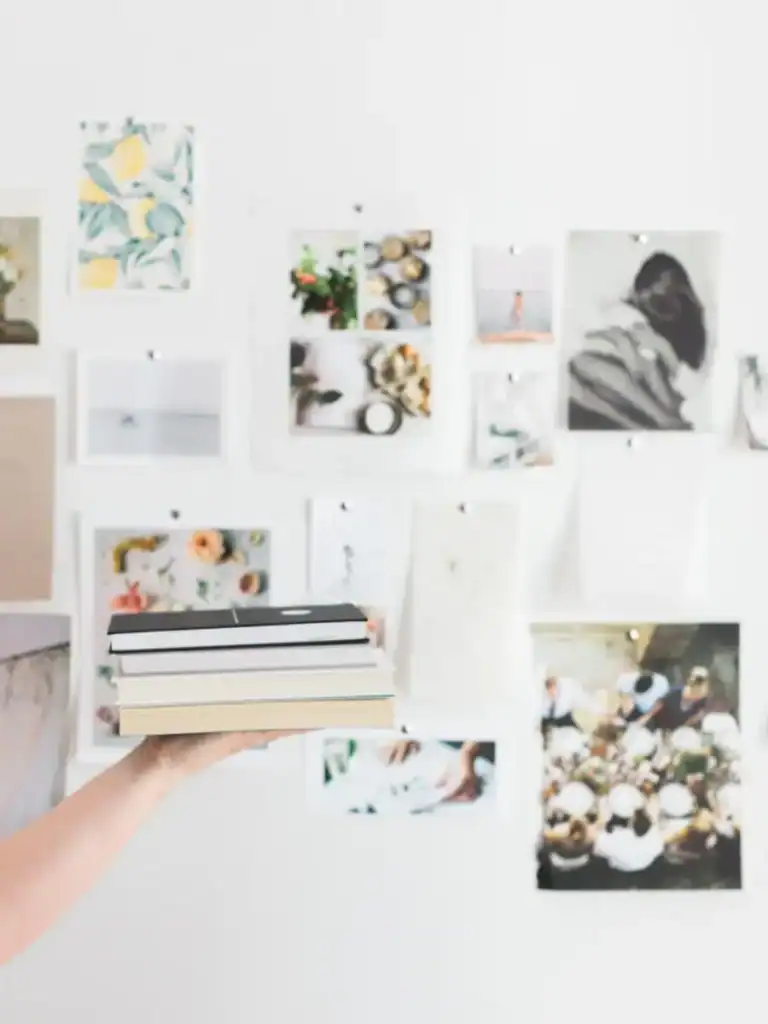
A spiritual vision board is a visual reflection of your inner life, not a blueprint for achievement.
It is a place to gather words, images, and ideas that reflect:
- what you value
- how you want to feel
- what has been quietly asking for your attention
- what you may be ready to release
What it is not:
- a promise that everything will work out a certain way
- a list of goals disguised as inspiration
- a productivity exercise (or habits or more “systems”) 👉🏽Want to break free of routines? Check out this post.
- a test of faith, optimism, or effort
At its core, a spiritual vision board is about alignment rather than outcomes. It helps you listen more closely to yourself instead of pushing toward a version of life that looks good on paper. Or a version of life that looks like someone else’s, or a life that society has fed you as ideal or aspirational.
Why a Spiritual Vision Board Can Feel Especially Supportive Right Now
There comes a point when the usual tools for motivation stop working. Many women reach midlife carrying years of responsibility, adjustment, and quiet endurance. The question is no longer “What should I strive for?” but “What actually supports me now?”
A spiritual vision board can be helpful when:
- you feel emotionally tired or overstimulated
- you are reassessing priorities after burnout, loss, or transition
- you want clarity without pressure
- you feel spiritually curious but resistant to anything rigid or performative
This isn’t about fixing your life. It’s about noticing what’s true, what’s working, and what needs adjusting so your life feels more aligned and more joyful.
🌟 More on the journey toward authenticity can be found here >>> Why Authenticity Matters
Spiritual Vision Board Ideas That Focus on Meaning, Not Outcomes
When people search for spiritual vision board ideas, they’re usually trying to answer a very practical question: What do I actually use, and how do I put this together in a way that feels meaningful?
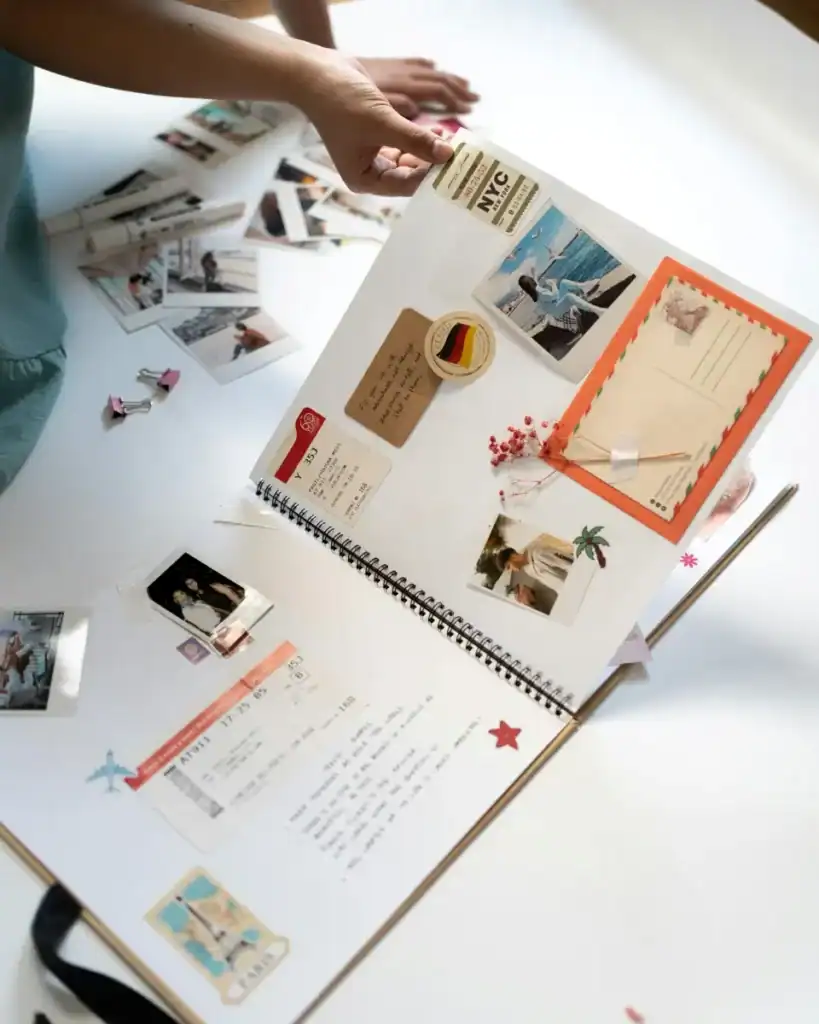
A spiritual vision board doesn’t require special supplies or artistic skill. It works best when it’s simple, tactile, and personal.
What you can use to create a spiritual vision board
You might already have everything you need. Common, low-pressure options include:
- A piece of poster board
- A page in a journal or notebook
- A corkboard or small bulletin board
- A digital document or notes app if you prefer something private and portable
The format matters far less than whether it feels easy to return to and reference throughout the year.
Materials that work well (and why)
- Magazines or printed images
Choose sources that reflect real life — home, nature, relationships, quiet moments — rather than aspirational lifestyles. Tear or cut images that feel familiar or calming, not impressive. - Words or phrases you write yourself
Oftentimes, the most meaningful pieces aren’t found; they’re written. Short phrases like “room to breathe,” “steady mornings,” or “less chaos” can be more powerful than quotes. - Photographs
Personal photos can anchor the board–a place where you walk daily, a room that feels peaceful, a moment that reminds you who you are when life is quieter. - Simple symbols
Shapes, open space, light, pathways, windows, or water often represent things like clarity, movement, or rest without needing explanation. - Basic tools
Scissors, glue, tape, markers or washi tape are enough. This is not about permanence or perfection.
How to decide what belongs on your board
Before attaching anything, pause and notice your reaction.
Ask yourself:
- Does this make me feel calmer or more pressured?
- Does this feel honest for my life right now?
- Would I want to see this on a hard day?
If something creates urgency, comparison, or the sense that you should be doing more, it doesn’t belong here. That feeling is information–it’s not serving you well so don’t include it.
What this looks like in real life
A spiritual vision board might be sparse. It might have more white space than images. It might include only a few words and one photo.
That’s not a lack of vision. That’s clarity. 🩷
The purpose isn’t to motivate action or outline goals. It’s to give yourself a visual point of reference — something that quietly reminds you of what matters so your choices feel more aligned, even when life is busy or uncertain.
How a Mindful Vision Board Encourages Clarity Without Pressure
A mindful vision board slows the process down. It is less about what you want to accomplish and more about how you want to live and move through your days and life.
This kind of board encourages awareness rather than striving. It asks you to notice:
- what already supports you
- what drains your energy
- where you feel most like yourself
Mindfulness here does not require discipline or practice. It simply means paying attention with kindness and honesty, without rushing to conclusions or plans.
Why aVision Board for Self-Reflection Feels More Supportive Than Goal Setting
For many women, a vision board for self-reflection feels more honest than traditional goal setting.
Reflection allows you to:
- Take an honest look at where you are right now, without beating yourself up about it
- Accept that some parts of your life are complicated and don’t need to be figured out all at once
- Notice patterns, habits, or preferences you’ve been living with for a long time but haven’t really named or paid attention to
This kind of vision board does not ask for answers. It allows room for questions, which can be just as valuable. Sometimes understanding what no longer fits is more helpful than deciding what comes next.
If you are looking for journal prompts for self-discovery, check out this blog post >>> 89 Journaling Prompts for Self-Discovery
How a Vision Board for Personal Growth Can Be Gentle and Realistic
The phrase “personal growth” often comes with pressure, but a vision board for personal growth does not have to be about becoming better or doing more.
At this stage of life, growth may look like:
- becoming more selective with your energy
- honoring clearer boundaries
- trusting your preferences
- choosing steadiness over intensity
Personal growth does not need to be visible or measurable to be real. A spiritual vision board can support growth by reminding you of what feels aligned rather than what looks impressive.
How a Spiritual Vision Board Fits Into Everyday Life
A spiritual vision board does not need to be displayed prominently or shared with anyone else.
Many people find it works best:
- inside a journal or notebook
- on a private wall or closet door
- as a small card tucked into a book
- as a subtle digital background rather than a constant visual reminder
If the board ever begins to feel demanding instead of supportive, that is a signal to adjust, move it, or step away.
An Everyday Joy Takeaway
A spiritual vision board isn’t about mapping out a better future or turning your life into a project. It’s about slowing down enough to really see the life you’re already living — what’s working, what isn’t, and what you’re tired of pushing through.
If it helps you feel a little more steady, a little more honest with yourself, or a little less rushed to figure everything out, then it’s doing exactly what it’s meant to do.
Are you stuck not knowing what your life’s vision truly is? Check out the posts below to unlock clarity and direction?
89 Journaling Prompts for Self-Discovery (For Women Over 40)
12 Monthly Reflection Questions to Pause, Reset, and Gently Realign in Midlife